Final Portfolio: Human, Tech & Play
A Talking Head
This project explores the relationship between subject and object in interactive play. By connecting a doll to Makey Makey and programming responses in Snap, the work enables the doll to react to human touch, challenging the traditional one-way dynamic of doll play. Each touched area triggers a distinct, personalized response, giving the impression of a doll with its own voice and perspective. This work uses mimicry to question the boundary between simulation and autonomy, turning the doll into a seemingly active participant in the interaction. It raises questions about agency, technological personhood, and how we assign meaning to non-human entities.
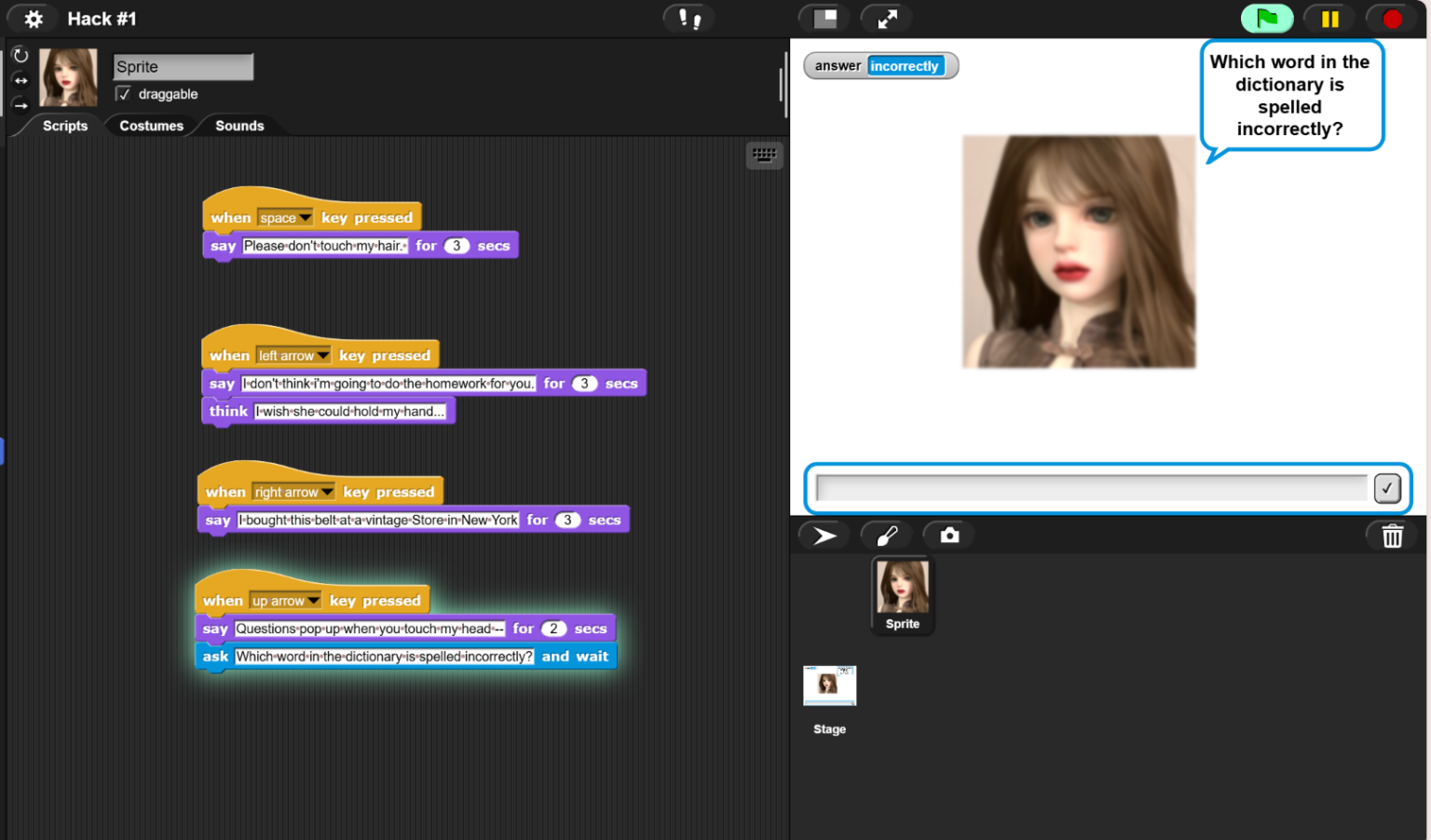
Snap! Program
Class Jange
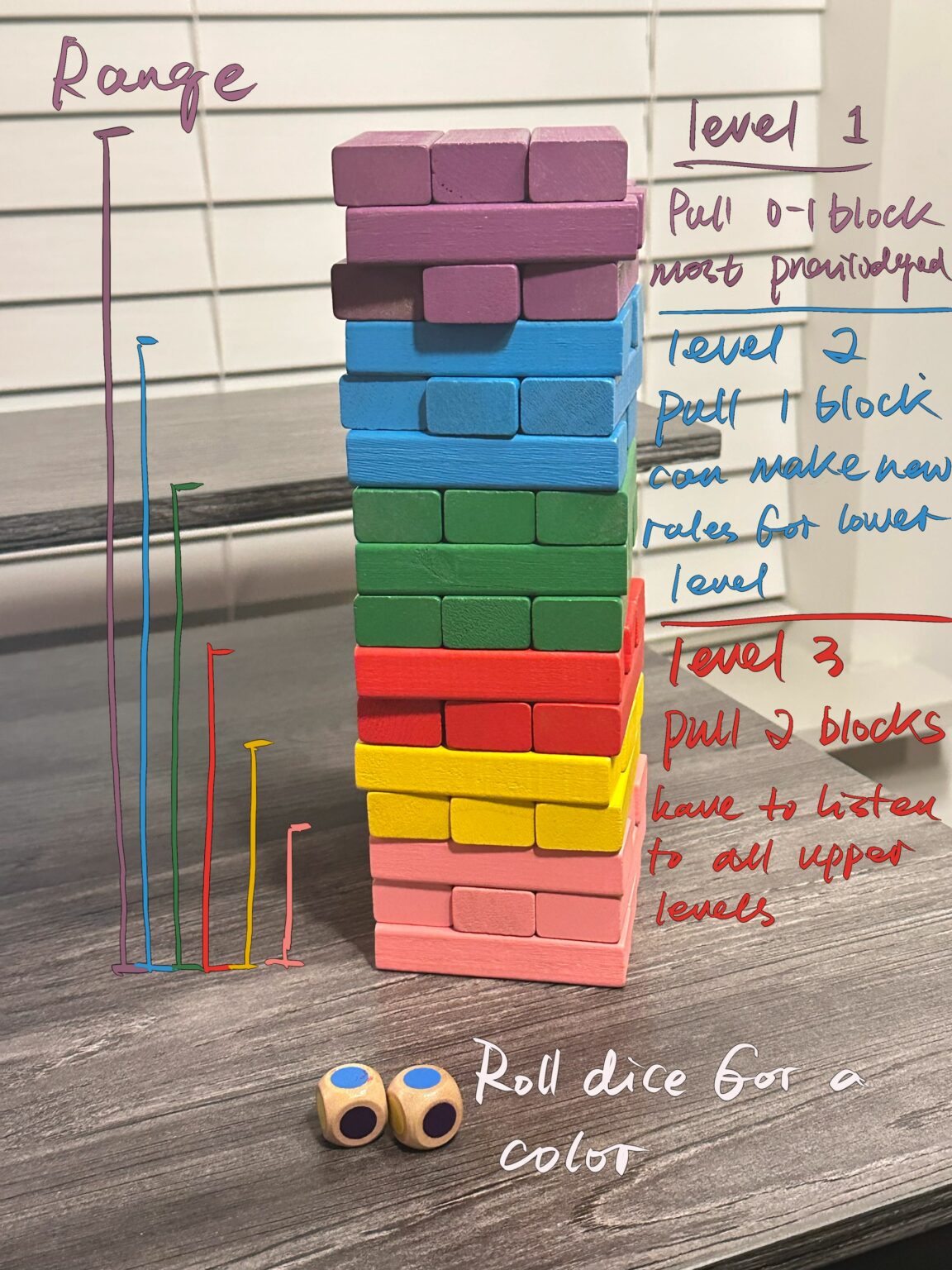
This project uses a modified Jenga game to examine the relationship between class, labor, and systemic inequality. Drawing from Mary Flanagan’s theory of Critical Play, it allows players to experience structural injustice through rule-based asymmetry, unequal labor burdens, and manipulated win conditions. Different block colors represent social classes, with higher-class players enjoying privileges like reduced actions and rulemaking power, while lower-class players bear more labor and face difficult moral choices, such as whether to strike or betray others. By inverting the win condition and rewarding the player who pulls the most blocks, the game challenges players to rethink who truly sustains society. “Class Jenga” transforms a familiar game into a metaphorical space where social hierarchies are enacted, questioned, and revealed to be unstable.
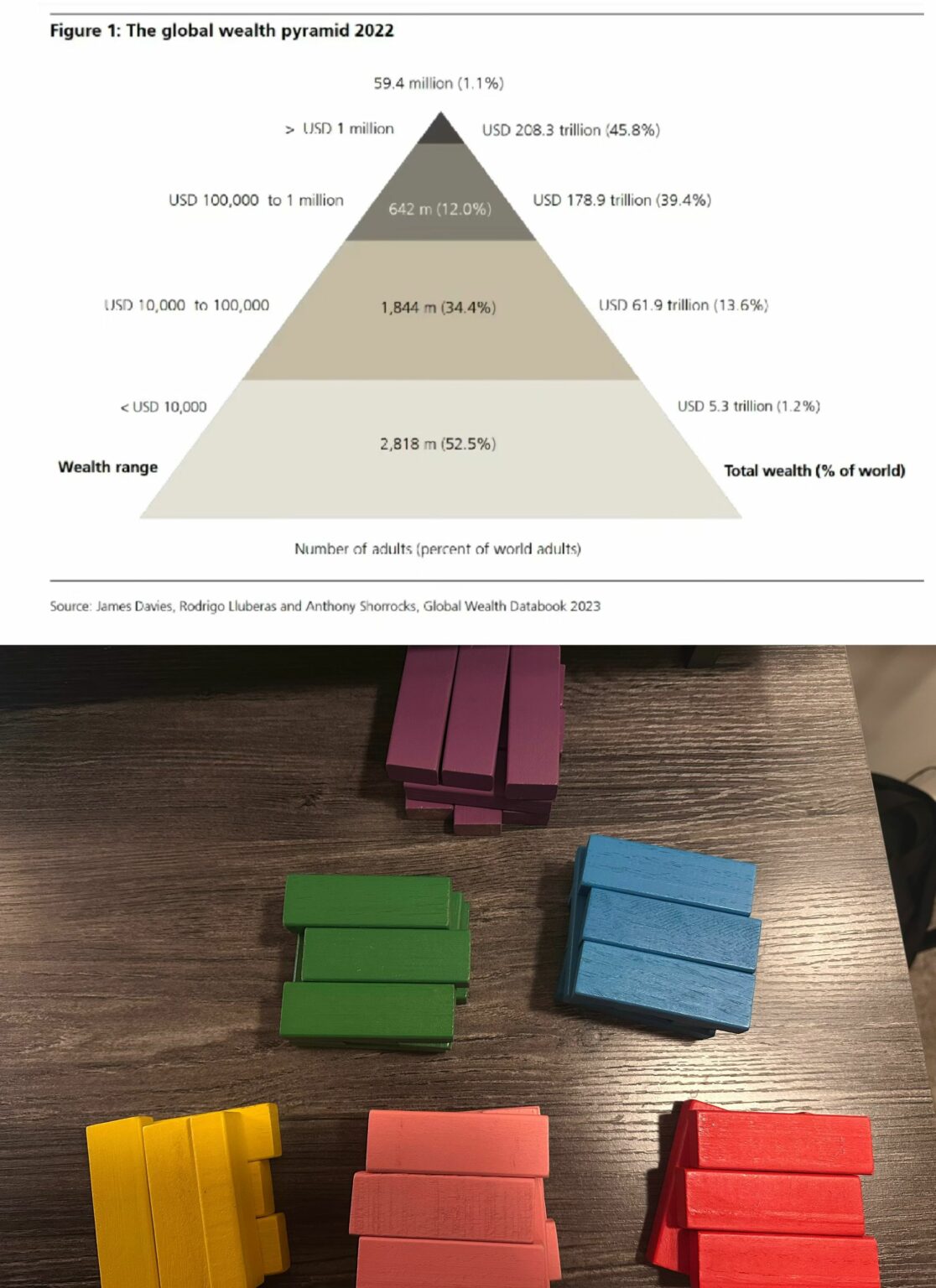
The main idea of the game
What Time Is It ?
The project uses Minecraft to question the boundary between virtual and real-world time. By building a functioning digital clock inside the game using Redstone circuits, the work inserts real-time measurement into a virtual world that normally operates on its own logic. This challenges Minecraft’s immersive escape and reframes it as a space that reflects real-world productivity and temporality. Drawing on ideas of simulation, dimensional control, and de-gamification, the project reveals how games not only allow creativity but also impose hidden limits. It also asks whether we control the game or whether the game redefines how we perceive reality.
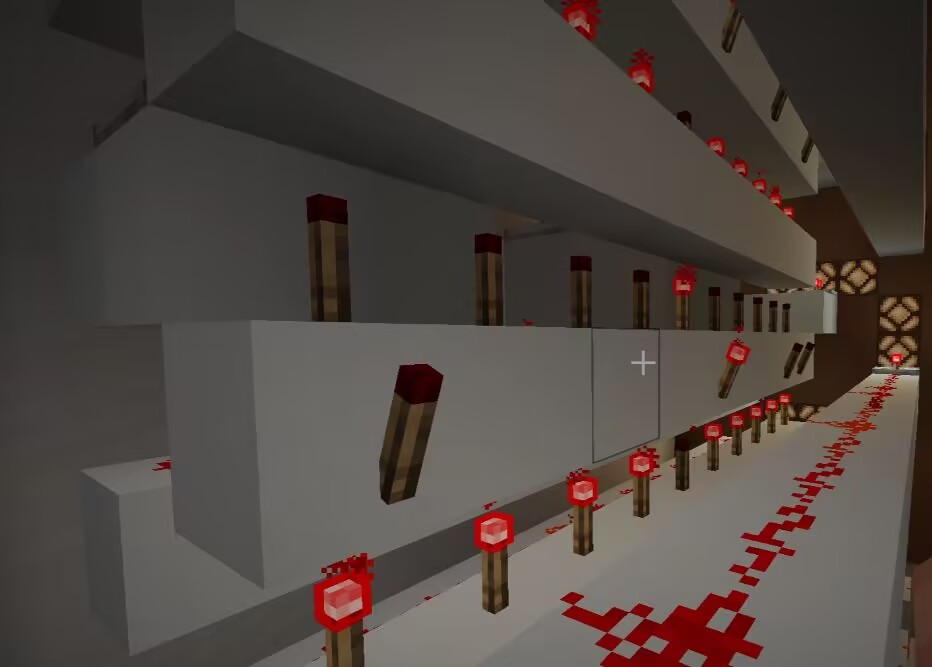
One of the redstone circuit units inside the clock
Vixen’s Guide
This video critiques the persistent, invisible structures of gendered discipline by remixing 1950s educational footage through textual rewriting, AI voice synthesis, and visual inversion. It uses The Good Wife Guide as a base and reimagines it as The Good Husband Guide, exposing the normalized violence embedded in “polite” domestic language. Drawing from Mary Flanagan’s theory of Critical Play, the work explores how contemporary AI systems (especially their voices and scripted neutrality) continue to reproduce gender roles. By juxtaposing ironic reversals with real speeches, images of women, and music by the all-female glam metal band Vixen, the project transforms the objectified figure into a speaking subject. It comes up with the question that how historical systems of control reappear in today’s technology, and what it means to reclaim authorship in both voice and representation.
The origin file of the video is unfortunately broken so the progress became unavailable.
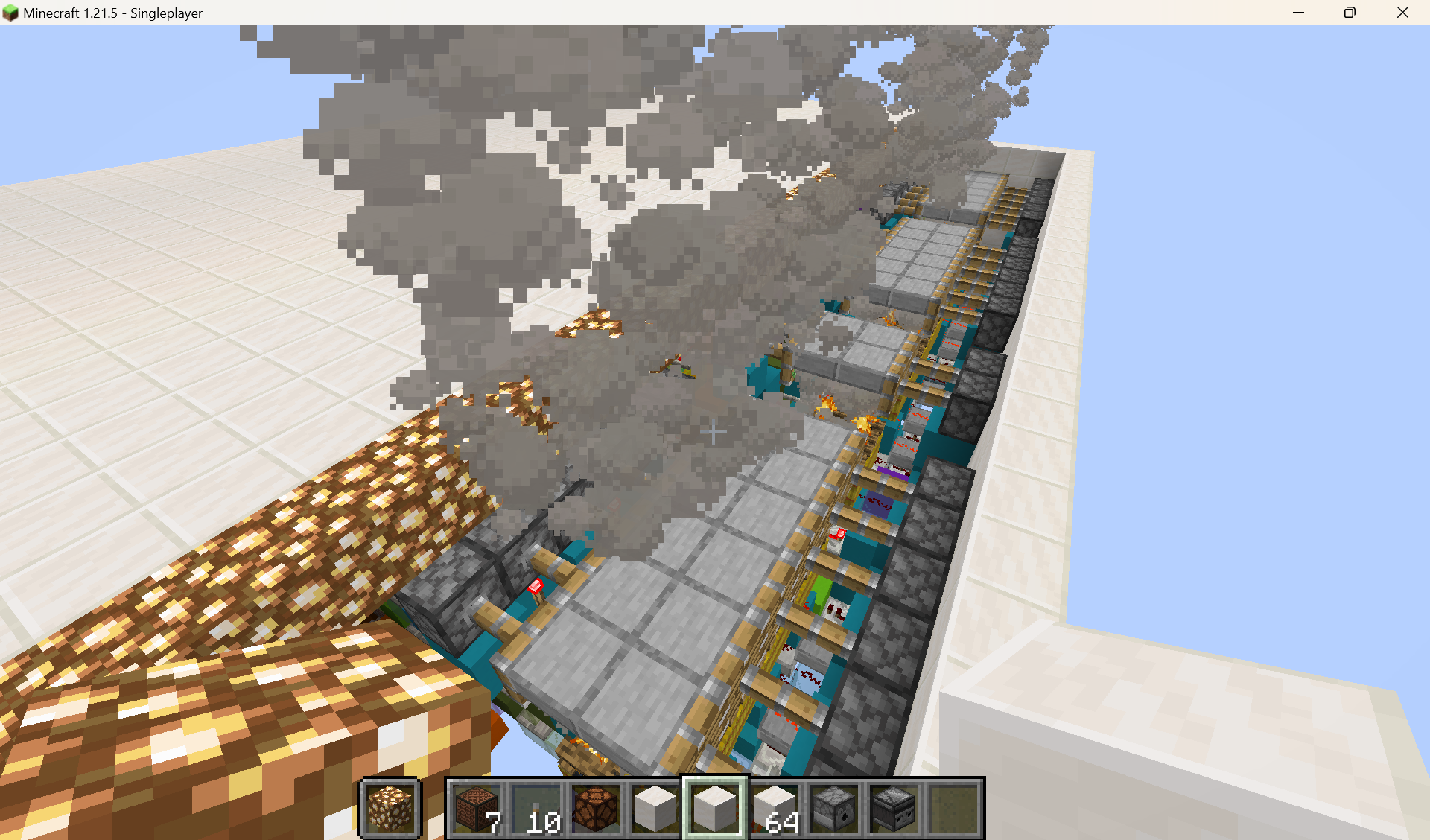
Where Has Time Gone?
The finl project reimagines a real-time clock built in Minecraft by shifting its focus from technical precision to perceptual experience. In contrast to the earlier version, which used redstone circuits to synchronize in-game time with real-world seconds, the updated version uses ephemeral smoke patterns to represent time’s passage, emphasizing dissipation, ambiguity, and delay. Drawing on Henri Bergson’s concept of continuous time, the work explores how temporal awareness emerges not from measurement but from disappearance. By juxtaposing real time and Minecraft’s internal time, the project highlights the tension between quantifiable systems and lived temporal experience. The smoke clock thus becomes both a sensory device and a philosophical prompt, questioning how we perceive time in digital environments.